
Understanding Electric Motors: The Heartbeat of Modern Machinery
Electric motors are integral to modern technology, powering applications from household appliances to industrial machinery. This guide explores the main types of electric motors, their operational principles, unique attributes, and typical applications, helping you choose the right motor for your needs.
Introduction to Electric Motors
Electric motors have transformed industries since their inception in the early 19th century by efficiently converting electrical energy into mechanical motion. Their evolution from simple designs to sophisticated, high-efficiency systems has made them indispensable across sectors like automotive, robotics, and manufacturing. These motors are crucial for driving innovation and enhancing productivity.
AC Motors Overview
Alternating Current (AC) motors are among the most common motor types today, operating on the principle of alternating current that creates a rotating magnetic field in the stator, inducing motion in the rotor. AC motors are favored for their robustness, simplicity, and cost-effectiveness, offering greater longevity with minimal maintenance compared to Direct Current (DC) motors.
Induction Motors: Workhorse of Industry
Induction motors, or asynchronous motors, operate via electromagnetic induction. The two primary types are:
- Squirrel Cage Induction Motors: Known for simplicity and durability, ideal for fans, pumps, and conveyors.
- Wound Rotor Induction Motors: Equipped with windings and external resistors, suitable for high-torque applications like cranes and elevators.
Induction motors are prevalent in industrial settings due to their reliability and efficiency, with limitations in speed control often addressed through Variable Frequency Drives (VFDs).
Synchronous Motors
Synchronous motors maintain a constant speed synchronized with supply current frequency. Subtypes include:
- Permanent Magnet Synchronous Motors (PMSM): High efficiency and power density, used in electric vehicles and robotics.
- Reluctance Synchronous Motors and Hysteresis Synchronous Motors: Offer precise speed control, suitable for precision tasks.
Synchronous motors are ideal for consistent speed applications but are more complex and costly than induction motors.
Linear Motors: Revolutionizing Motion
Linear motors generate linear motion directly, eliminating the need for transmission systems and enhancing precision. They are common in high-speed trains, CNC machines, and automation systems, offering high accuracy but often limited by high costs and travel distances.
Understanding DC Motors
DC motors, powered by direct current, offer excellent speed control and torque. Subtypes include:
- Brushed DC Motors: Use a commutator and brushes, offering high starting torque but requiring regular maintenance.
- Brushless DC (BLDC) Motors: Utilize electronic commutation, reducing maintenance with long lifespan and high efficiency, ideal for electric vehicles and drones.
Special-Purpose Motors
Stepper Motors: Precision and Control
Stepper motors rotate in discrete steps, providing precise control for applications like 3D printing and CNC machining. However, they may suffer from reduced torque at high speeds.
Universal Motors: Versatility and Limitations
Universal motors operate on both AC and DC power, favored for their compact size and high starting torque in power tools and appliances, though noisier and requiring frequent maintenance.
Choosing the Right Motor for Your Application
Selecting a motor depends on factors like speed, torque, and maintenance needs. Induction motors suit constant speed tasks, while synchronous and BLDC motors are ideal for precision and variable speed applications. High starting torque applications benefit from series DC motors and wound rotor induction motors. Brushless designs offer low maintenance and high reliability.
Introducing Hanlang Technology
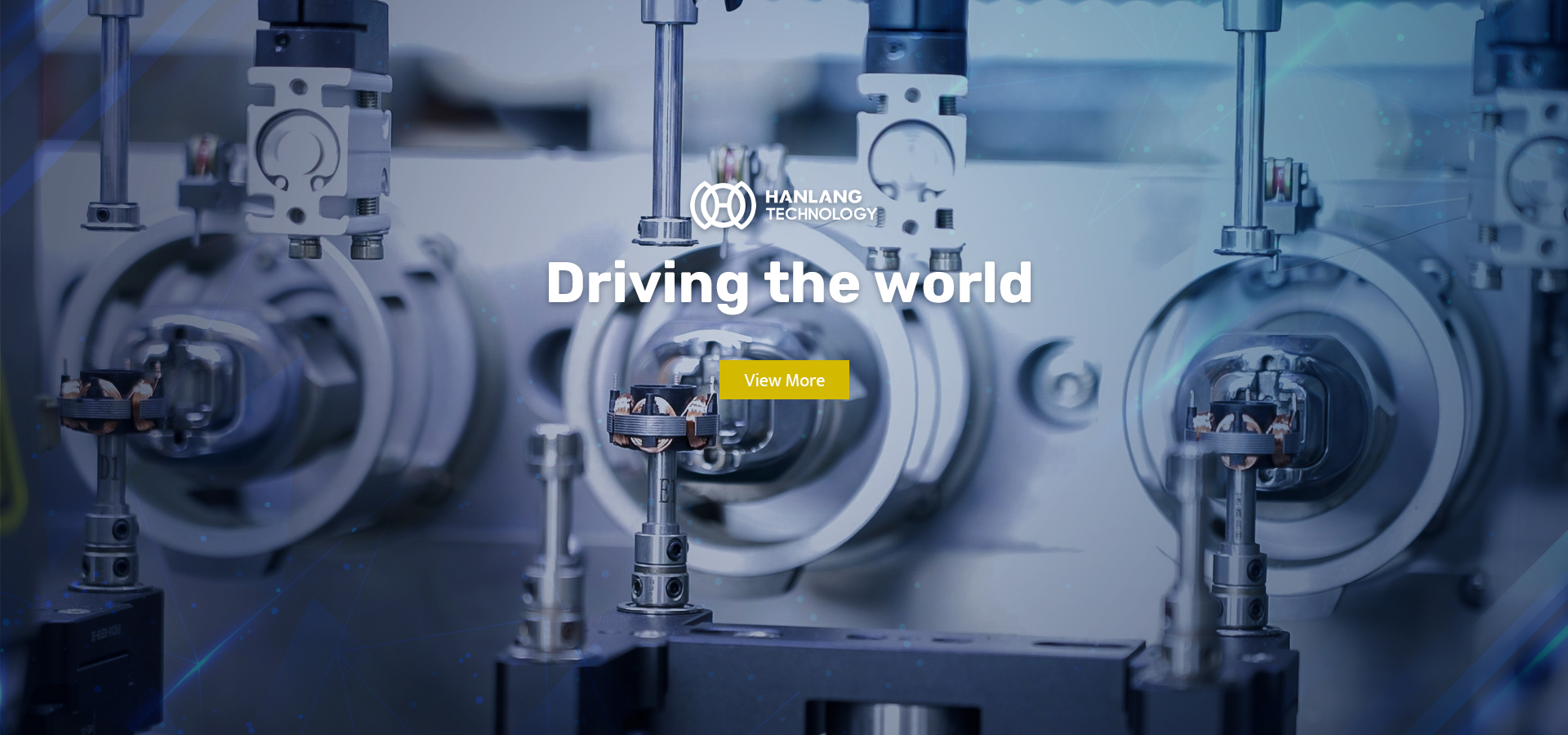
Ningbo Hanlang Intelligent Drive Technology Co., Ltd., based in Cixi, is a leader in the micro-motor industry. Specializing in R&D, manufacturing, and sales, Hanlang serves markets including home appliances, automotive parts, and industrial automation with innovative motor drive solutions, reflecting its role in the global motor industry.
Post time: 2025-11-14 14:29:36